The Algarve celebrates Easter quite differently from the rest of Portugal. There are flower processions that exist nowhere else in the country, a regional food tradition rooted in centuries of Moorish influence, medieval fairs, and a coastline that in early April is warm enough to enjoy but still far from the summer crowds. This guide covers the main events, dates, food traditions and practical details for anyone spending Semana Santa in the south of Portugal.
Easter 2026 Dates
Palm Sunday: March 29th
Maundy Thursday: April 2nd
Good Friday: April 3rd (national holiday)
Easter Sunday: April 5th (national holiday)
Easter Monday: April 6th — not a holiday in Portugal
Good Friday and Easter Sunday are public holidays, meaning most shops, supermarkets and banks will be closed. Restaurants in tourist areas generally stay open. A detail worth knowing: unlike in the UK, Germany or the Netherlands, Easter Monday is a regular working day in Portugal — everything reopens on Monday morning.
The Best Easter Processions in the Algarve
Yes, there are processions, and the Algarve’s are genuinely unique within Portugal. Three stand out above the rest, and all three take place on Easter Sunday.
Festa da Mãe Soberana — Loulé
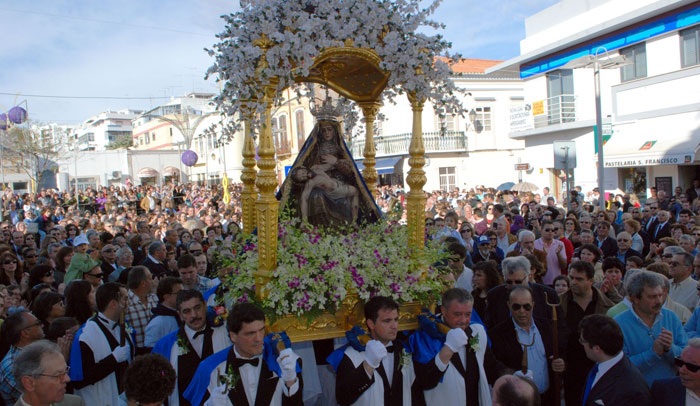
The biggest religious event in the Algarve and the largest Marian celebration south of Fátima, with a tradition going back nearly five hundred years. On Easter Sunday, the statue of Nossa Senhora da Piedade is carried down from her hilltop sanctuary to the Church of São Francisco in the centre of Loulé. Men dressed in white carry the statue on their shoulders while thousands follow behind with flowers, candles and religious banners. Church bells ring non-stop and fireworks go off throughout the procession, even in broad daylight.
A second, even larger procession — the Festa Grande — takes place fifteen days later, on April 19th, when the statue returns to her hilltop chapel. During this one, the procession pauses in front of the Câmara Municipal (town hall) where the mayor salutes the statue from the balcony, a tradition that draws enormous crowds. In terms of sheer scale and emotion, Loulé is the one to prioritise if you can only attend a single Easter event in the Algarve.
Festa das Tochas Floridas — São Brás de Alportel
The Flower Torch Festival takes place on Easter Sunday morning in this small inland town about 20 minutes north of Faro. It starts around 10:00 AM. Men carry tall wooden poles decorated with lavender, rosemary and wildflowers through streets that residents have covered in hand-made flower carpets stretching over one kilometre. Traditional red and white quilts hang from the windows above.
The most distinctive element is a call-and-response that punctuates the whole procession: someone shouts “Ressuscitou como disse!” (He is risen as He said) and the crowd stops, faces each other, and responds “Aleluia, Aleluia, Aleluia” while lifting the flower torches skyward. The smell of fresh herbs and flowers along the route is extraordinary — lavender and rosemary everywhere. Around 3:00 PM there is a Festival of Sounds and Tastes in the churchyard, with prizes for the best torches, live music and regional food. Of the three main Easter events, this is the most visually striking and the most photogenic.
Holy Week Processions — Tavira
Tavira spreads its Easter celebrations across the full week rather than concentrating on Sunday alone, which makes it the best place to experience the build-up of Semana Santa from start to finish. Palm Sunday features woven palm crosses carried through the old town. On Maundy Thursday and Good Friday, torch-lit processions of silence move through the historic centre, and a Via Sacra (Stations of the Cross) is reenacted in the cobbled streets by candlelight. On Easter Sunday the church bells ring across the rooftops and the whole town shifts from mourning to celebration.
Tavira and São Brás are about 40 minutes apart by car, so it is possible to catch the morning Tochas Floridas in São Brás and make it to Tavira for Easter Sunday celebrations in the afternoon.
Traditional Easter Food in the Algarve
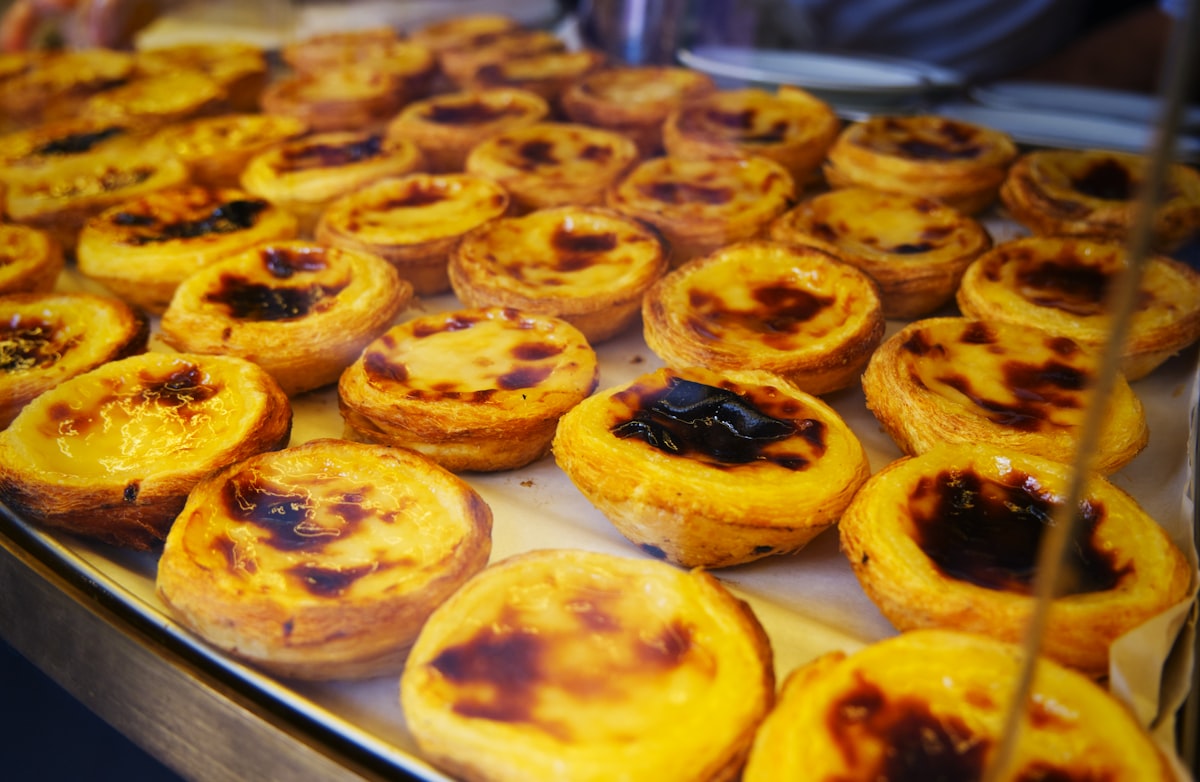
Easter food in the Algarve has little in common with what is served in Lisbon or Porto. The Moorish heritage of the region — centuries of Arab rule left a deep mark on what grows here — means almonds, figs and carobs feature heavily in local sweets. On top of that, Algarve convents developed an elaborate tradition of egg-yolk-based pastries that remains the backbone of regional desserts to this day.
Folar de Páscoa (Easter Bread)
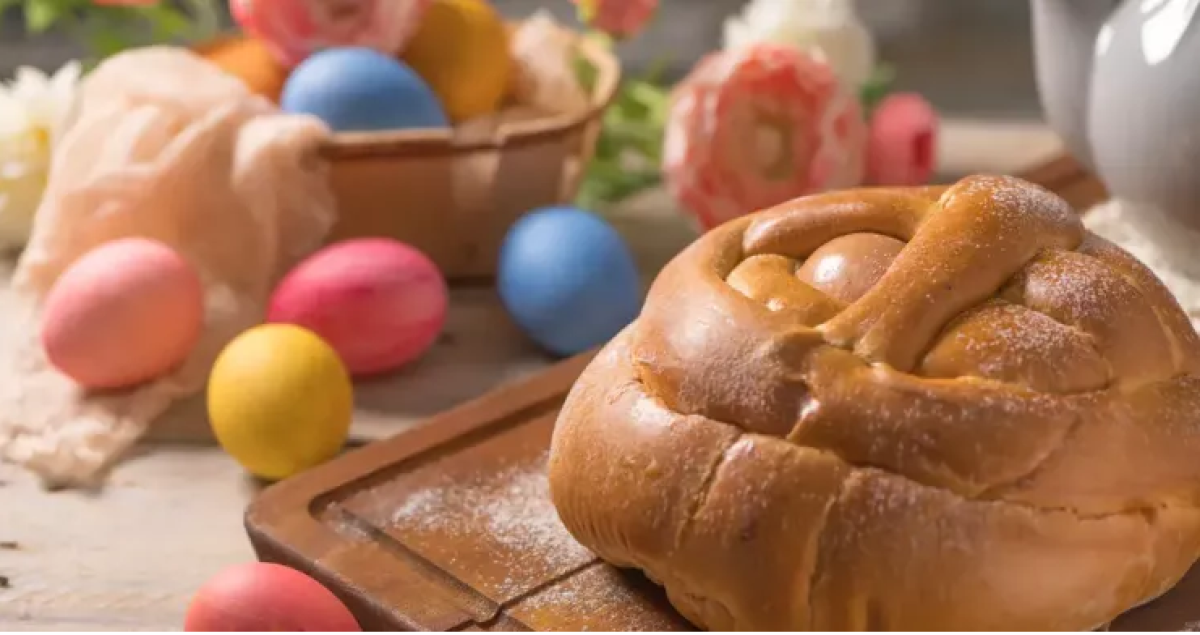
The Algarve version is not really bread at all — it is closer to a dense, sweet cake. The most famous folar comes from Olhão, created over fifty years ago by a woman named Maria Eugénia Rita: seven layers of dough with a caramelised syrup of sugar, butter and cinnamon between each one. It looks heavy and unassuming from the outside, but the inside is gooey, fragrant and incredibly rich. The caramelised layers keep it moist for days without refrigeration. In the Algarve, it is traditional for godfathers to give folares to their godchildren at Easter, a custom that many families still follow. You will find folares in every bakery and supermarket across the region from mid-March onward.
Dom Rodrigo
Small parcels of egg yolk, ground almonds, sugar and cinnamon wrapped in colourful shiny foil — these are sold in every pastelaria in the Algarve year-round but appear in larger quantities at Easter. The recipe was created in the 18th century by nuns at the Convent of Our Lady of Carmo in Lagos, named after the regional governor at the time, Dom Rodrigo de Menezes. The convents had surplus egg yolks because the whites were used for clarifying wine and starching habits, which led to an entire category of yolk-based sweets across the Algarve. Dom rodrigo is the best-known.
Morgado
A dense almond cake filled with doce de ovos (egg yolk jam) and chila (a preserve made from a type of squash), traditionally from Portimão and Silves. The larger version is decorated with petal shapes, the smaller morgadinho with silver dragées. These are special-occasion desserts, not everyday fare, and Easter is their main season.
Main Meals
On Good Friday, the tradition across Portugal is to eat bacalhau (salt cod) with no meat — the Algarve follows this strictly. On Easter Sunday the table changes entirely: roast kid goat (cabrito) or lamb with potatoes and seasonal vegetables is the standard Easter lunch in most Algarve households. Many restaurants offer special Easter menus over the weekend.
What Else to Do During Easter Week
Medieval Fairs
Castro Marim hosts a medieval fair over Easter weekend with reenactments, banquets, market stalls and entertainment. Silves does something similar, with its red sandstone castle providing the backdrop for jousting demonstrations, traditional crafts and period food. Both are family-friendly and free to attend. Silves has the more dramatic setting of the two.
The Giant Folar in Guia
Every Easter Sunday in the village of Guia, near Albufeira, a 250-kilo folar is baked and served free to the public. This year is the 21st edition, with a crafts exhibition and traditional sweets alongside it. It runs all day.
Hiking and Coastal Walks
Late March and early April is arguably the best season for walking the Algarve coast. Wildflowers cover the clifftops, temperatures are comfortable at 17–20°C, and the trails are quiet. The Seven Hanging Valleys trail from Praia da Marinha is the most popular route — limestone cliffs, sea stacks and hidden coves along roughly six kilometres of coastline. The Rota Vicentina on the western coast is wilder and more remote, with rosemary-scented headlands and far fewer people. For birdwatching, Fonte Benémola inland is the top pick during spring migration. For more ideas, see our guide to hidden gems in the Algarve.
Beaches in April
The weather in early April is pleasant but not hot — expect daytime temperatures around 18–20°C with plenty of sun. The Atlantic water temperature sits at 16–17°C, which is cold for swimming but fine for beach walks and picnics. About one in four April days is warm enough for proper sunbathing, while most others are bright and dry. A light jacket or windbreaker is useful because the ocean breeze can be strong. For a particularly beautiful stretch of coast to explore on foot, Alvor and its estuary are at their best in spring.
Practical Tips
Accommodation around Easter fills up faster than most visitors expect — it is one of the busiest periods in the Algarve outside of July and August, so booking in advance is strongly recommended, especially for properties near the coast or in towns like Loulé and Tavira.
Do your grocery shopping by Thursday evening. Supermarkets and most shops close on Good Friday and Easter Sunday. Restaurants and cafés in tourist areas tend to stay open, but anything in smaller towns or off the main strips may not.
Easter in the Algarve draws mostly Portuguese families rather than international tourists. The atmosphere is quite different from summer — more local, more festive, and noticeably less resort-oriented. Even on the busiest days, though, it is nothing like July or August: no parking problems, no overcrowded beaches, no need to reserve sun loungers at dawn.
A rental car is essential if you want to visit multiple processions. Loulé, São Brás de Alportel, Tavira and Guia are spread across the region, and public transport between them is limited. With a car, doing São Brás in the morning and Loulé in the afternoon on Easter Sunday is perfectly manageable.
Suggested Easter Week Plan
Palm Sunday (March 29th) — Arrive and settle in. Drive to Tavira for the palm cross procession in the old town. Dinner at a local tasca: grilled fish and vinho verde.
Monday to Wednesday — Hike the Seven Hanging Valleys one morning. Visit Silves castle and try morgado at a nearby pastelaria. Browse the municipal markets in Loulé (Saturday) or Olhão (weekday mornings) for local cheese, honey, cured meats and olives. If the medieval fair at Castro Marim or Silves overlaps with these days, it is worth a few hours.
Maundy Thursday (April 2nd) — Evening procession of silence in Tavira, after sunset. The candlelit Via Sacra through the old streets is one of the most atmospheric events of the whole week.
Good Friday (April 3rd) — Via Sacra reenactment in Tavira during the day. Bacalhau for lunch. Afternoon walk along the Ria Formosa or the coast east of town.
Easter Sunday (April 5th) — Start at the Tochas Floridas in São Brás de Alportel (from 10:00 AM), then drive to Loulé for the Mãe Soberana procession in the early afternoon. Roast lamb for dinner. If time allows, the giant folar in Guia runs all day and is on the way back toward the coast.
Monday onward — The holiday ends and the Algarve quiets down. Beach walks, a visit to some of the less-known spots along the coast, or simply a slow morning at a café watching the Atlantic. The region will not be this peaceful again until October.
Spending Easter in the Algarve?
Monte Rentals manages holiday properties across the region. If you are looking for a villa or apartment for your Easter stay, get in touch and let us help you find the right one.
Planning a stay in the Algarve?
Book direct with Monte Rentals and skip the booking fees: see all our Algarve holiday rentals. Or browse holiday apartments in Albufeira · villas with private pool.
Frequently asked questions
Can I use this Easter 2026 guide to plan another year?
Use it for ideas about places and traditions, but check the new year's dates and event programmes directly with the organisers. The 2026 schedule is a historical reference, not a future events calendar.
How should I organise an Easter week in the Algarve?
Choose the events that matter most, then build nearby visits and meals around them. Keep outdoor plans flexible and confirm any seasonal opening hours before travelling.