1. Praia Dona Ana
Dona Ana is regularly voted one of the best beaches in Europe. Golden sandstone cliffs frame a sheltered cove with clear turquoise water and fine sand. The beach has a restaurant, lifeguard service in summer and consistently earns a Blue Flag. Access is via stairs from the car park above. In July and August, arrive before 10:00 to find a good spot. The car park fills quickly. If you are staying nearby, it is also a short walk from other top beaches in the Algarve.2. Ponta da Piedade
This headland, about 2 km south of the centre, is the most iconic spot in Lagos. Sandstone cliffs have been carved by the sea into arches, pillars and grottoes. A lighthouse marks the tip and wooden stairs lead down to the water level, where local boatmen offer cave tours lasting 30–45 minutes for around €20–25 per person. Kayak tours are also available from the marina or Dona Ana beach, typically lasting 2–3 hours for €35–45. Visit in the late afternoon for the best light on the golden rock.3. Lagos Old Town
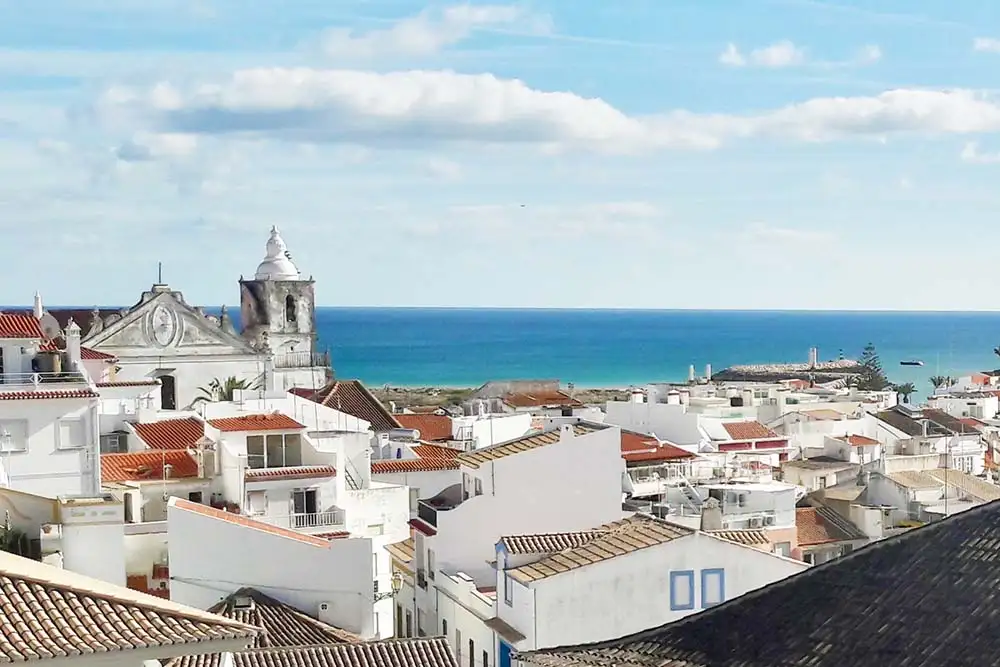
The historic centre of Lagos is compact and easy to explore on foot. Enter through the Porta de São Gonçalo, the 17th-century gateway from the waterfront. The main square, Praça Gil Eanes, is surrounded by cafés and features a striking modern statue of King Sebastião. The narrow streets behind the main pedestrian road, Rua 25 de Abril, are full of small shops, local restaurants and traditional architecture. If you enjoy exploring Algarve towns, our guide to Tavira covers another town worth visiting.4. Praia do Camilo
Just around the headland from Dona Ana, Praia do Camilo is reached by approximately 200 wooden steps down the cliff face. The staircase with the ocean behind it is one of the most photographed views in the Algarve. At the bottom, a small cove connects to a second one through a natural rock tunnel. The beach is small and fills up fast in summer. Parking is very limited — it is better to park at Dona Ana and walk 5 minutes along the cliff path. At the top, the restaurant O Camilo offers grilled fish with exceptional terrace views.5. Igreja de Santo António
This 18th-century church looks simple from the outside but hides one of the finest baroque interiors in the Algarve. Every surface is covered in gilded woodwork (talha dourada), from floor to ceiling. It is considered one of the best examples of Portuguese baroque outside Lisbon and Porto. The adjacent Museu Municipal Dr. José Formosinho covers local history from Roman times to the present. A combined ticket costs around €3–4.Do you own a property in the Algarve?
At Monte Rentals, we manage holiday homes in Lagos and across the Algarve with a local, hands-on approach. No call centres, no intermediaries — just real people taking care of your home as if it were our own. Learn more about our property management6. Meia Praia
Meia Praia is the largest beach in Lagos, stretching about 4 km east of the marina. Unlike the cliff beaches on the south side, Meia Praia is flat, open and spacious. The water is calmer here, making it a popular choice for families with children. It is also a well-known spot for kitesurfing and other water sports. Several beach bars and restaurants are spread along the sand. Parking is easy and you can reach the beach on foot from the marina via a pedestrian bridge.7. Mercado de Escravos
Lagos has an important and difficult chapter in its history. In 1444, the town was the site of Europe’s first slave market. The building on Praça do Infante Henrique now houses a small but significant memorial museum that documents this period. The visit takes about 20 minutes and entry costs around €3. It is a sobering but essential stop for understanding the full history of the town and its role in the Age of Discoveries.8. Municipal Market
The Mercado Municipal sits on Avenida dos Descobrimentos near the marina. It opens Monday to Saturday from around 07:00 to 13:00–14:00. The ground floor sells fresh fish and seafood directly from the boats. Upstairs you will find fruit, vegetables, local honey, almonds, figs and regional products. Saturday morning is the busiest and most lively day. This is a working market where locals do their daily shopping — not a tourist attraction — and the quality reflects that. The local honey and almond sweets make excellent gifts. For more tips on local life, check our practical tips for your stay in the Algarve.9. Sagres and Cabo de São Vicente
About 30 minutes west of Lagos by car, Sagres and Cabo de São Vicente make one of the best day trips in the Algarve. The Fortaleza de Sagres sits on a dramatic cliff above the Atlantic, linked to the legend of Henry the Navigator. Nearby, Praia do Tonel and Praia do Beliche are among the most beautiful surf beaches in the region. Cabo de São Vicente, the southwestern tip of mainland Europe, offers 75-metre cliffs, a working lighthouse and some of the most spectacular sunsets in Portugal. Look for the famous German food truck selling “the last bratwurst before America.” You can also combine this trip with a visit to Portimão, which is on the way back.10. Nightlife on Rua Cândido dos Reis
Lagos has one of the most active bar scenes in the Algarve, particularly along Rua Cândido dos Reis and the surrounding streets. Bars fill up from around 23:00 in summer with an international crowd. Three Monkeys is known for cocktails, Bon Vivant offers a slightly more refined atmosphere, and Whyte’s covers familiar pub territory. Inside Lagos is the main nightclub. The atmosphere is relaxed and friendly. Many hostels organise pub crawls during the high season.How to get to Lagos
Lagos is approximately 90 km west of Faro Airport, about 1 hour and 15 minutes by car on the A22 motorway. The A22 uses fully electronic tolling (no barriers), so make sure to arrange a Via Verde device at the car rental desk. Buses from Faro Airport take about 2 hours and cost €5–8. Private transfers cost €70–120 for the vehicle. For more on getting around the region, see our practical Algarve guide.When to visit
The best months to visit Lagos are June and September — warm weather, good water temperatures and fewer crowds than the July–August peak. October is still pleasant for beach days. April and May are ideal for walking and sightseeing. Winter is mild but some tourism businesses reduce their hours.Practical tips
Parking in the centre is metered and difficult in summer. Use the large lot near the marina. At the beaches, Meia Praia has the easiest parking. English is widely spoken. Tap water is safe to drink. Tips of 5–10% are appreciated in restaurants but not expected. Lagos offers a combination of natural beauty, rich history and authentic local life that few towns in the Algarve can match. Whether you are looking for beaches, culture, food or simply a pleasant place to spend a few days, Lagos delivers. Discover also our guide to 10 essential things to see in Albufeira and our complete list of what to see in the Algarve.Planning a stay in the Algarve?
Book direct with Monte Rentals and skip the booking fees: see all our Algarve holiday rentals. Or browse holiday apartments in Albufeira · villas with private pool.
Frequently asked questions
How should I organise a first day in Lagos?
Choose the historic centre and one coastal area as the main parts of the day. Leave time for the transfer between them and check access, opening hours and the group's ability to manage steps or longer walks.
Do I need to book coastal activities in Lagos in advance?
Check availability and the operator's conditions for your chosen date. Boat activities depend on sea conditions, so confirm cancellation arrangements and keep a land-based alternative.