
Updated on 13 September 2026.
We recommend dividing a first visit to Portimão between the town’s riverside and Praia da Rocha. Start with the part that matters most to you, then allow time for the transfer rather than treating the city centre and beach as the same place.
For a culture-led day, visit the museum and riverside before heading to the coast. For a beach-led stay, keep a separate morning or afternoon for the town. Either plan gives you more time to enjoy each stop than a long list of places scattered across the municipality.
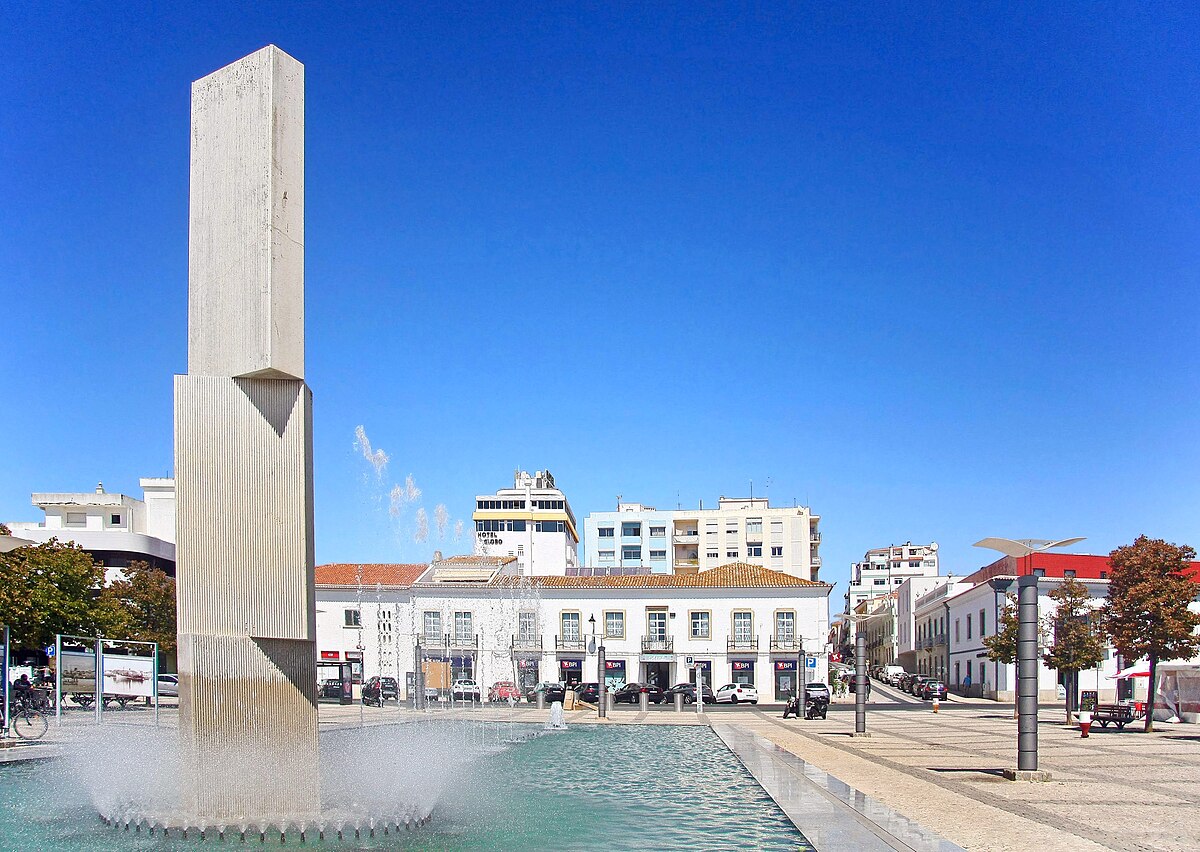
Walk from the old centre to the Arade
For a compact town route, we suggest the Igreja do Colégio dos Jesuítas on Alameda da Praça da República, Largo 1º de Dezembro and Praça Manuel Teixeira Gomes by the riverside. These are among the landmarks in the official Portimão visitor guide. Continue along the waterfront towards the museum on Rua D. Carlos I.
Allow roughly an hour for this outdoor section if you want short stops; that is our suggested planning allowance, not a guided-tour duration. Entering a church or exhibition needs extra time and a check of its opening arrangements. On a museum day, keep this walk and lunch together before travelling to the beach.
Visit the former canning factory
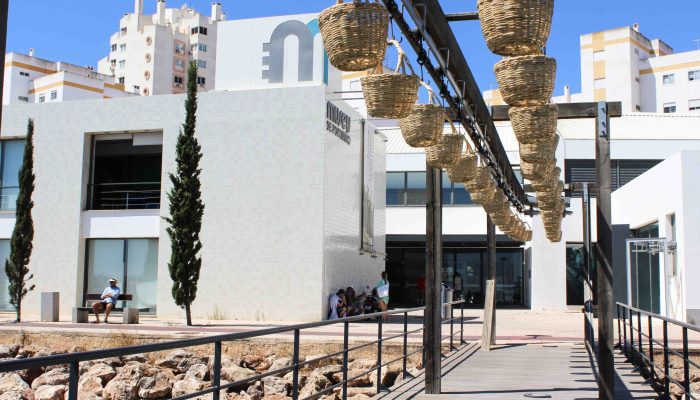
The Portimão Museum occupies the former Feu Hermanos canning factory. It gives context to the city’s fishing and industrial history, making it a useful stop before or after the riverside rather than simply an indoor alternative when it rains.
According to the museum’s visitor information, the standard ticket is currently €3. From September through July, opening is Tuesday 14.30–18.00 and Wednesday to Sunday 10.00–18.00. August has later hours. It closes on Mondays and national public holidays; check the official page before travelling.
We would plan lunch around the Tuesday afternoon opening rather than arrive in the morning and wait. If your visit falls in August, use the later opening to keep the middle of the day flexible.
Give Praia da Rocha its own part of the day
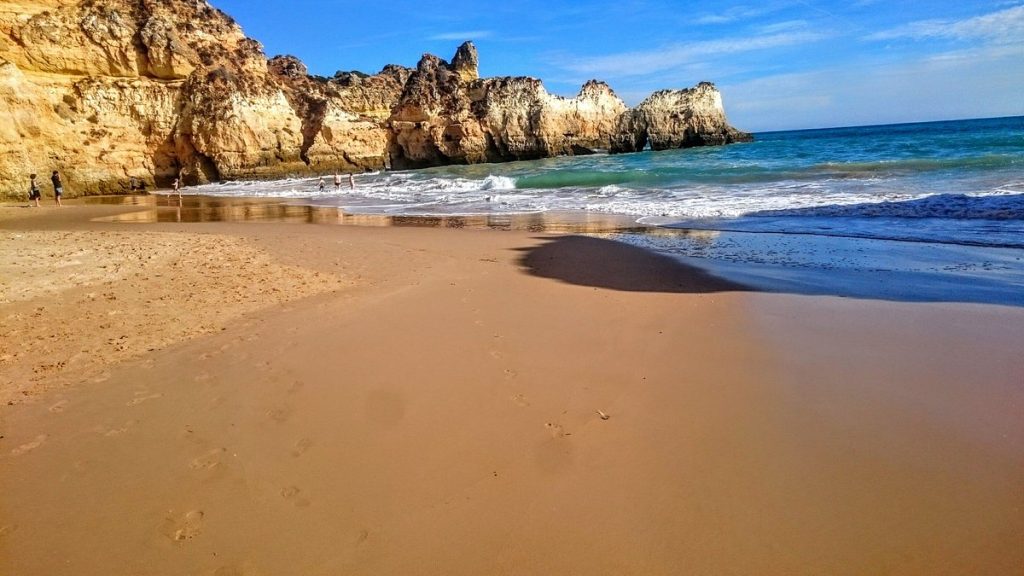
At the beach, decide whether you want to settle on the sand or walk and take in the views. The local tourism guide identifies the Santa Catarina fortress and Três Castelos viewpoint as places to look over the coastline.
Check your chosen access before carrying beach equipment down. If someone needs step-free access, confirm the specific route and facilities rather than assuming all entrances are equivalent. For bathing, follow the flags and lifeguard instructions on the day.
We suggest agreeing a return point before the group separates. A recognisable entrance and a saved map pin make meeting again easier than an arrangement to find each other somewhere along the beach.
Choose lunch before the group gets hungry
Keep lunch near the part of Portimão you are already visiting. Look at the menu and confirm what is included before ordering; for fish sold by weight, ask for the weight and expected price. If you need a child-friendly meal or have a dietary requirement, check that first.
Our guide to Algarve food explains dishes you may see on menus. For a fish meal, ask what is available that day and whether side dishes are included. This makes the cost clearer before you order.
Make the transport plan realistic
If driving, check the posted parking conditions at each stop and leave access roads clear. If using public transport, check the current return service before leaving your accommodation. Do not plan around an old timetable quoted in a travel article.
We recommend deciding in advance whether the town-to-beach transfer will be a walk, taxi or another service, based on your group’s mobility, the weather and what you are carrying. The shortest route on a map is not always the most comfortable one.
Build a simple day around one main interest
For a museum day, combine the central streets, lunch, museum and riverside, then add the beach if time permits. For a beach day, prioritise Praia da Rocha and a meal nearby, keeping the town for another outing. On a Monday or public holiday, check alternatives rather than relying on the museum being open.
For an inland day out, our Loulé itinerary offers a different pace. You can also explore our Algarve accommodation and choose a base that suits the trips you actually want to make.
Planning a stay in the Algarve?
Book direct with Monte Rentals and skip the booking fees: see all our Algarve holiday rentals. Or browse holiday apartments in Albufeira · villas with private pool.
Frequently asked questions
Are Portimão town centre and Praia da Rocha the same stop?
Plan them as different parts of your visit. Combine the centre and Arade waterfront first, then allow time for the transfer if you also want to spend time at Praia da Rocha.
How can I build a simple day in Portimão?
Choose either culture or the beach as the main focus, then add a nearby meal or walk. Check the museum's hours and your transport arrangements before fixing the order of the day.