
Algarve Holiday Rental Returns and the Costs to Consider
We get asked the same question almost every week. “Is the Algarve still worth investing in?” And honestly, after managing properties across this region for years, our answer hasn’t changed. Yes. Absolutely yes.
But let’s not just take our word for it. Let’s dig into the numbers, the legal bits, and the on-the-ground reality that we see every single season.
Why the Algarve Keeps Pulling Investors Back
There’s something about this stretch of southern Portugal that never gets old. The 300 days of sunshine a year certainly help, but it goes deeper than weather. The Algarve has quietly built itself into one of Europe’s most resilient property markets — and that’s not marketing speak, that’s what the data shows.
Property values across the region rose by roughly 8–10% in 2025, depending on the area. Tavira and Lagos saw some of the sharpest increases. Even quieter spots like Carvoeiro and Ferragudo, which five years ago felt almost like hidden gems, have caught up. We watched a two-bedroom apartment in Carvoeiro that sold for €185,000 in 2021 go back on the market last autumn for €290,000. It sold in three weeks.
That kind of appreciation isn’t accidental. Portugal’s Golden Visa programme (now restructured but still relevant), the Non-Habitual Resident tax regime, strong airline connectivity from the UK and northern Europe — it all compounds.
And then there’s the rental income on top.
What Returns Actually Look Like — No Fluff
We manage properties across the central and eastern Algarve, so we’ve got a pretty clear picture of what owners are actually earning. Not projections. Real numbers from real bookings.
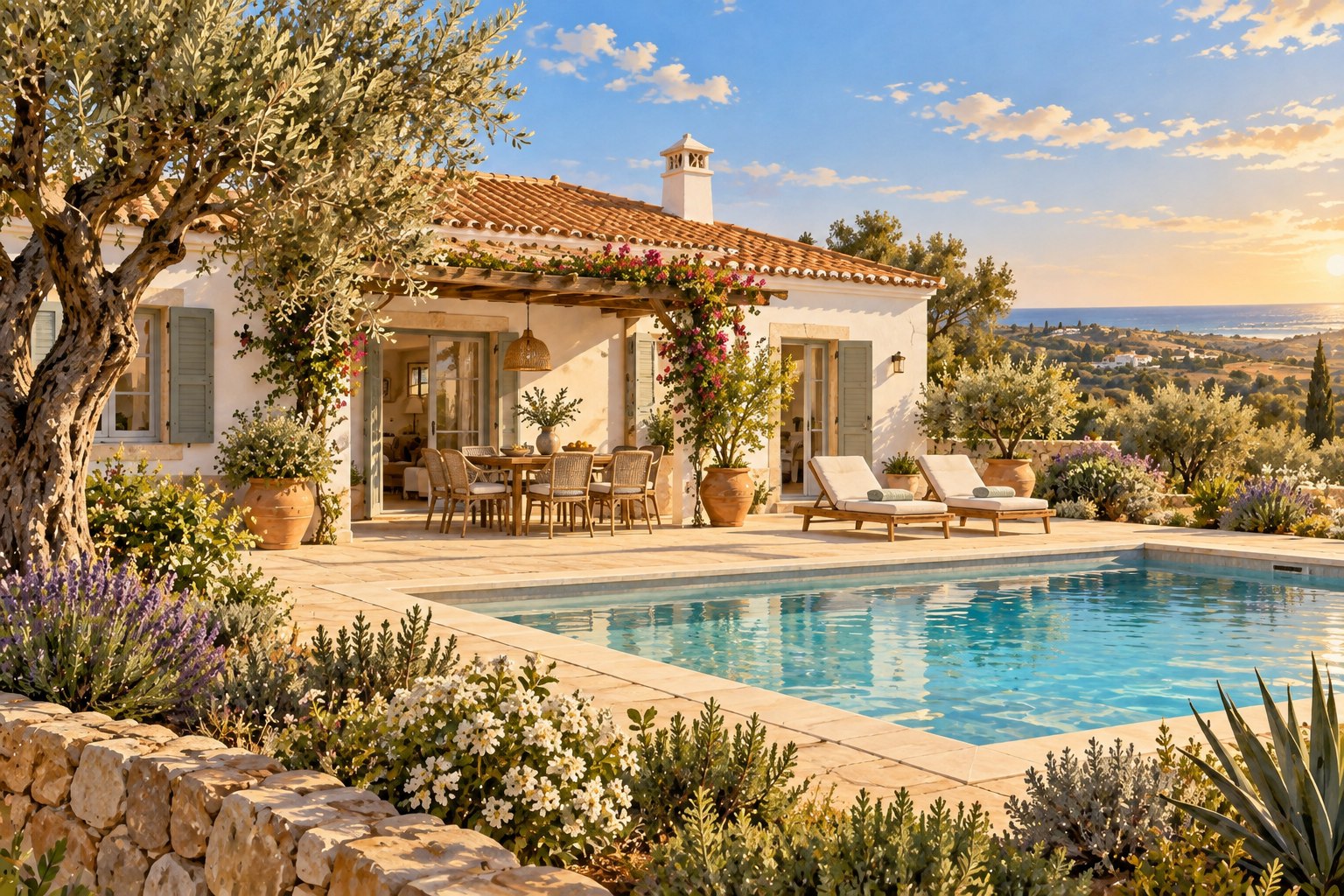
Last summer, one of our properties in Vilamoura — a three-bedroom villa with a private pool — grossed just over €42,000 between May and October. After our management fees, maintenance, cleaning, and running costs, the owner cleared around €28,000 net for the season. On a property worth roughly €480,000, that’s close to a 6% net yield from summer alone. Add the shoulder months and the odd winter booking and you’re looking at something closer to 7%.
Not every property does that, obviously. A one-bedroom apartment in Albufeira without a pool will earn less. But even those are pulling in €12,000–€18,000 gross per year if they’re well-managed and properly listed. The key word there is well-managed. We’ve taken over properties from other agencies where the occupancy rate was sitting at 40% and pushed it past 75% within one season just by fixing the listing photos, adjusting the pricing strategy, and actually responding to guest enquiries within the hour.
Returns by Area — Where the Money Really Is
This is where it gets interesting. Not all parts of the Algarve perform equally, and if you’re still deciding where to buy a rental property in the Algarve, the differences matter quite a lot.
- Vilamoura & Quinta do Lago: Premium pricing, strong demand from British and German tourists. Average nightly rates of €180–€350 for a good villa. High purchase prices mean yields hover around 4–6%, but capital appreciation is rock solid.
- Lagos & Praia da Luz: Growing fast. More of a mixed crowd — families, surfers, digital nomads. We’ve seen yields of 5–7% here, and property prices are still more accessible than the Golden Triangle.
- Tavira & East Algarve: The quiet achiever. Lower purchase prices, increasingly popular with the over-50 crowd and culture-seekers. Yields can hit 6–8% if you price right. The Ria Formosa coastline is a genuine draw.
- Albufeira & Central Algarve: The volume play. Tons of demand, especially from budget-conscious families and groups. You won’t charge €300 a night, but occupancy rates are consistently high. Yields of 5–7% are common.
For a deeper dive into the numbers, our Algarve market analysis breaks it all down by area and property type.
The Legal Framework — Less Scary Than You Think
Right, let’s talk about the bit that puts most people off. The paperwork. The licences. The Portuguese bureaucracy that everyone warns you about.
Here’s the truth: it’s not that bad. Genuinely. We help owners through this process constantly, and while it’s not exactly fun, it’s completely manageable if you know what you’re doing (or have someone who does).
The AL Licence
If you want to legally rent your property to holidaymakers in Portugal, you need an Alojamento Local (AL) licence. Full stop. No grey area. Operating without one risks fines of up to €40,000, and the authorities have been cracking down — especially since the new housing regulations came into effect. We break down where those rules stand now in our guide to the 2026 Alojamento Local rules for Algarve owners.
The process involves registering with your local câmara (town hall), getting a safety inspection, and meeting certain requirements around fire extinguishers, first aid kits, and a complaints book. Sounds tedious? It is, a bit. But we’ve walked dozens of owners through it and most get approved within 4–8 weeks.
We’ve put together a comprehensive guide on how to get your AL licence in the Algarve in 2026 that covers every step. Worth a read before you start.
NIF Number
You’ll also need a NIF — Portugal’s tax identification number. If you’re a non-resident (most of our British clients are), you’ll need a fiscal representative in Portugal. This is someone who receives your tax correspondence on your behalf. We can connect you with reliable fiscal reps who charge around €150–€250 per year for the service.
Tax Obligations
Rental income from your AL property is taxable in Portugal. The standard rate for non-residents is 25% on gross income, though there are deductions you can claim — management fees, maintenance, cleaning, utilities, insurance. Some of our owners get their effective rate down to 15–18% once everything’s accounted for.
There’s also the UK-Portugal double taxation treaty to consider, which prevents you from being taxed twice on the same income. But please — and we can’t stress this enough — talk to an accountant who understands both jurisdictions. We’ve seen owners lose money by trying to sort this themselves based on forum advice.
Holiday Lets vs. Long-Term Rentals
This one comes up a lot. Should you go short-term (holiday lets) or long-term (12-month tenancies)?
Honestly? It depends on your goals. Short-term holiday rentals almost always generate more revenue — sometimes two or three times more than a long-term let. But they require more management, more turnover, more wear and tear.
Long-term rentals are steadier. Predictable income, one tenant, fewer headaches. But the yields are lower, and Portugal’s tenant protection laws are quite strong, which means eviction can be a drawn-out process if things go wrong.
Most of our clients end up choosing holiday lets because the income difference is just too significant to ignore. A property that might rent for €800/month on a long-term lease can pull in €800 per week during July and August. The maths speaks for itself.
We’ve written a full comparison of long-term rentals vs. holiday lets in the Algarve if you want the detailed breakdown.
Seasonal Strategy — Because Timing Is Everything
One thing we’ve learnt (sometimes the hard way) is that a good seasonal pricing strategy makes or breaks your annual returns.
Peak season here runs from mid-June to mid-September. That’s when you charge premium rates and your property should be booked solid. If it’s not, something’s wrong — either the listing, the pricing, or the management.
But here’s what a lot of new owners miss. The shoulder months — April, May, early June, October — are where the smart money is. We’ve been pushing hard on marketing our properties to retired couples and remote workers during these periods, and it’s working. A two-week booking in late April at €120/night is €1,680 that most owners leave on the table because they only think about summer.
Winter is trickier. The Algarve doesn’t shut down — it still gets 15–18°C and sunshine most days — but demand drops off significantly. We’ve had success with monthly winter rates for long-stay guests. Think golfers, retirees escaping the British winter, digital nomads. €1,200–€1,800 per month won’t make you rich, but it covers costs and keeps the property occupied (which is better for the building anyway).
February 2026 was interesting for us. We had three villas booked out almost entirely to golf groups from Scotland. Hadn’t planned for it — they found us through Google and booked directly. That kind of organic demand in winter tells you something about where this market is heading.
Why Property Management Isn’t Optional
Look, we’re a property management company, so take this with whatever grain of salt you want. But we genuinely believe that trying to manage an Algarve rental from the UK is one of the fastest ways to burn out on property investment.
The time zone difference is only an hour, sure. But when a guest messages at 10pm saying the hot water isn’t working, someone needs to respond. When the pool pump breaks in August (and it will, at some point), someone needs to get a technician out that same day. When check-in is at 3pm and the previous guests trashed the place, someone needs to coordinate an emergency deep clean.
That someone is either you — constantly checking your phone, dealing with Portuguese tradespeople over WhatsApp, trying to coordinate cleaners from 1,500 miles away — or it’s a local team that does this every day.
A good management company will typically charge 15–25% of rental income, and they should earn every cent of it. They’ll handle guest communication, cleaning, maintenance, key exchange, linen, pricing optimisation, platform management, reviews — all of it.
If you’re weighing your options, our guide on how to choose a property management company in the Algarve will help you ask the right questions.
The Bottom Line
The Algarve isn’t a get-rich-quick scheme. We’d never claim that. But it is one of the most reliable, enjoyable, and genuinely profitable places in Europe to own a rental property. The combination of strong tourist demand, rising property values, a favourable legal framework, and a quality of life that makes you actually want to visit your own investment — it’s hard to beat.
We’ve been doing this long enough to have seen market dips, regulatory changes, and the odd curveball (2020, anyone?). Through all of it, the Algarve has come back stronger. And with 2026 shaping up to be another record year for Portuguese tourism, the fundamentals haven’t looked better.
If you’re sitting on the fence, our honest advice? Stop reading articles and start running the numbers on a specific property. That’s when it gets real.

Ready to maximise your Algarve investment?
Our team at Monte Rentals handles everything — from licensing and guest management to maintenance and revenue optimisation. Whether you’re just starting or looking to improve your returns, we’re here to help.
Get a Free ConsultationPlanning a stay in the Algarve?
Book direct with Monte Rentals and skip the booking fees: see all our Algarve holiday rentals. Or browse holiday apartments in Albufeira · villas with private pool.
Frequently asked questions
Are rental returns from an Algarve home guaranteed?
No. Results depend on the property, purchase cost, demand, availability and operating expenses. Use documented assumptions and several scenarios rather than treating an example or a forecast as a promise.
How can I balance personal use with holiday-rental income?
Set your own dates first and forecast only the remaining availability. Include the costs of maintaining the home throughout the year, including months when it is empty or used by the owner.