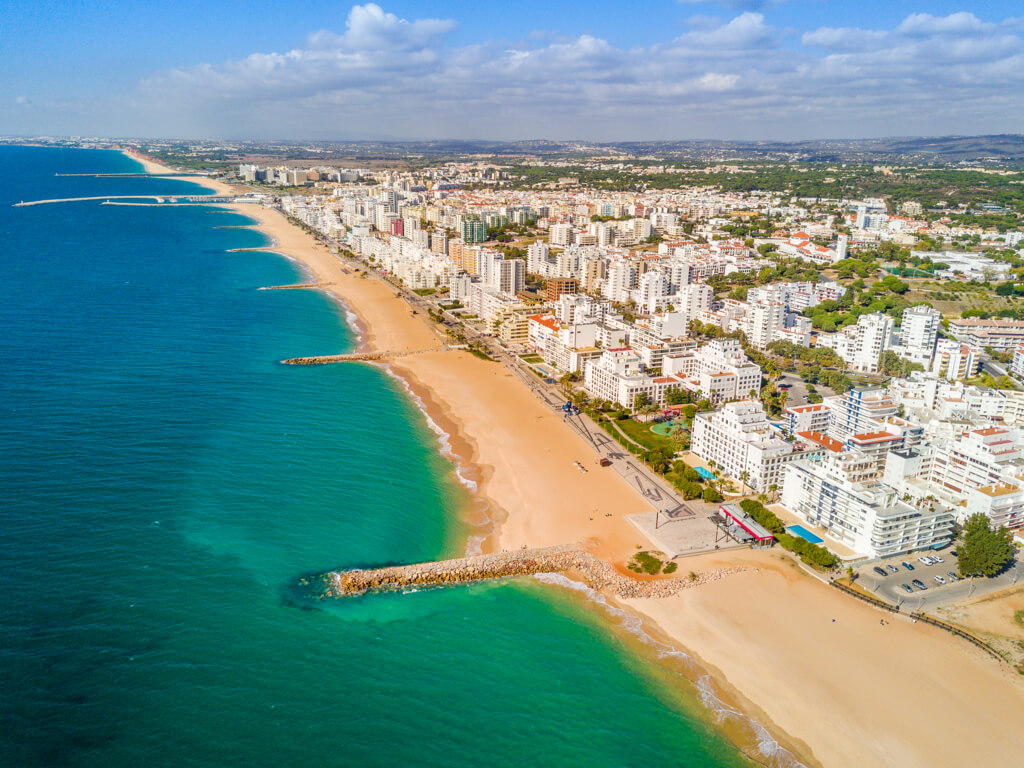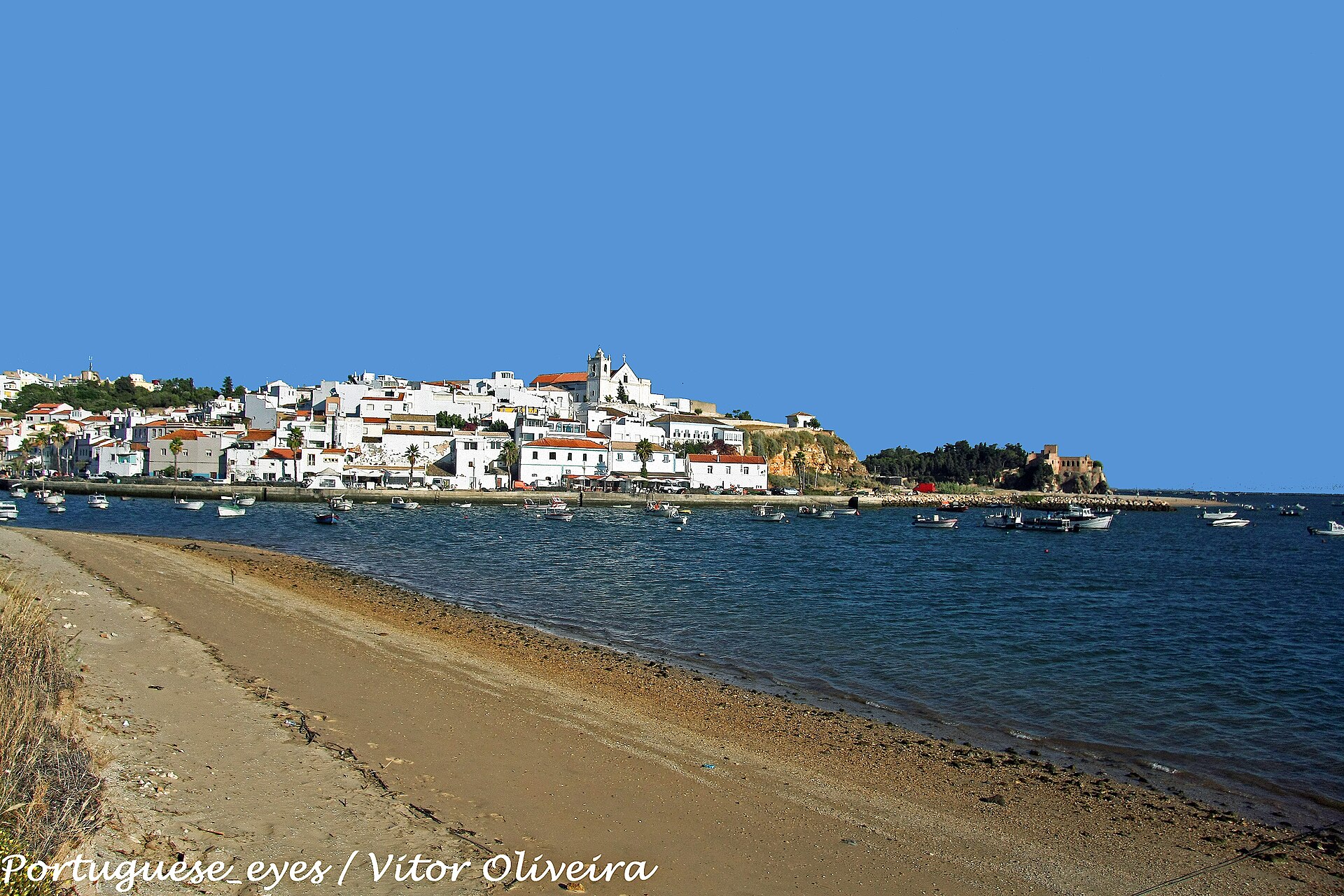
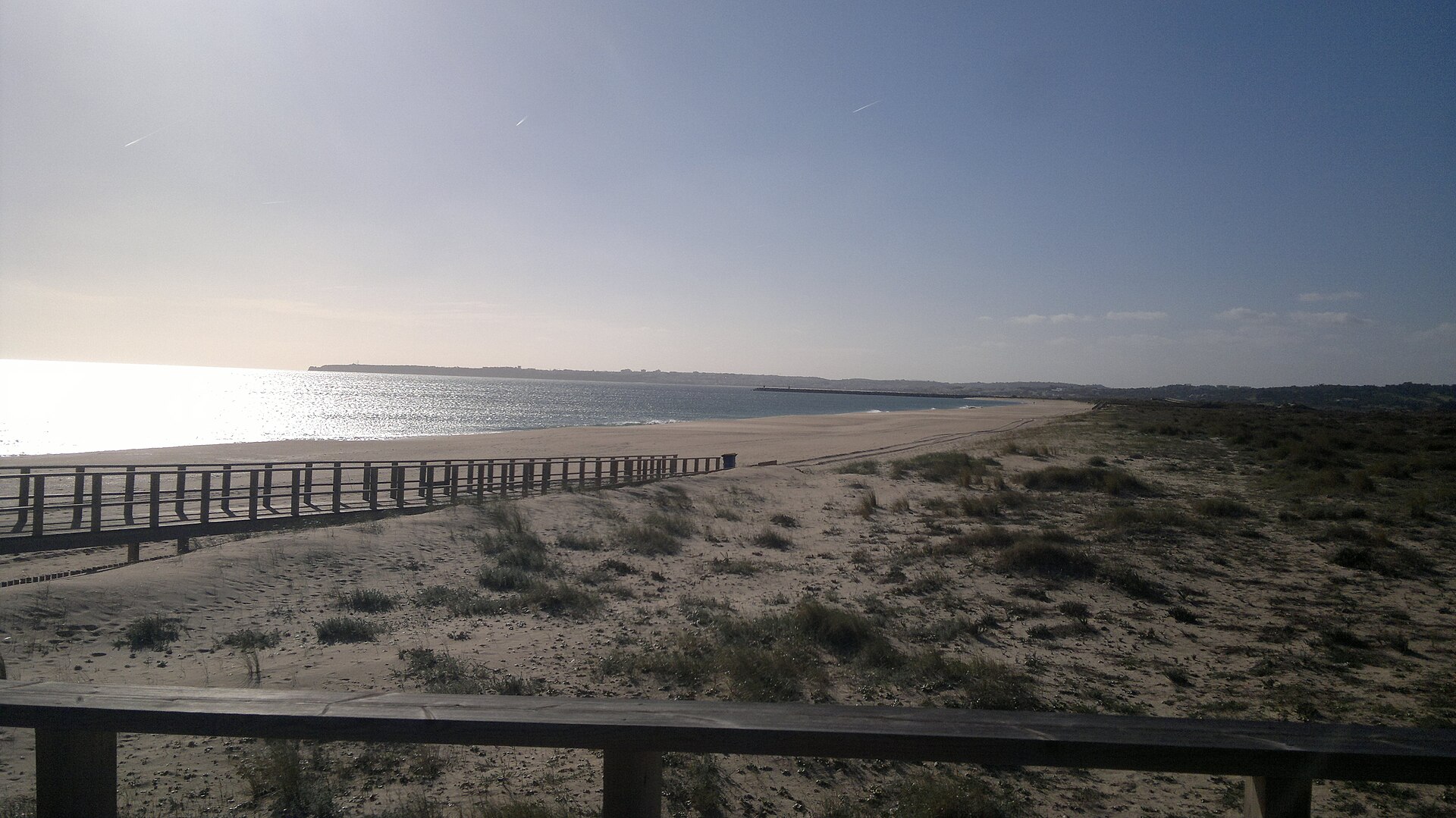
Every September the same question lands in our inbox from owners who bought here for the summer and never really planned the rest of the year. The pool cover goes on, the last family flies home from Faro, and there is a house sitting empty until Easter. What to do with your Algarve property between October and March is the decision that quietly separates the owners who make money here from the owners who merely enjoy the place.
This article uses the official occupancy figures published by Turismo de Portugal and INE, current asking prices from five Algarve letting agencies, and the actual wording of Portuguese insurance policies and tenancy law. Where a number could not be verified, we have left it out.
What the low season actually pays
Start with the real numbers, because most owners are working from an impression rather than data. These are the official 2025 figures for the Algarve, from the INE guest survey published through Turismo de Portugal. They cover hotels, tourist apartments and resorts, not Alojamento Local, but the seasonal shape is the same.
| Month, 2025 | Room occupancy | RevPAR | Average nightly rate |
|---|---|---|---|
| October | 74.5 % | €68.48 | €106.64 |
| November | 46.8 % | €27.36 | €74.39 |
| December | 33.8 % | €23.97 | €76.22 |
| January | 32.8 % | €20.59 | €65.10 |
| February | 43.1 % | €27.88 | €66.87 |
| March | 54.9 % | €33.51 | €73.78 |
| August | 86.6 % | €173.98 | €217.11 |
Read the last two columns together, because that is where the useful insight sits. August earns 8.4 times what January earns per available room, but the nightly rate only falls by a factor of 3.3. The winter collapse is an occupancy problem, not a pricing problem. Cutting your January rate does not fill January, because the guests are not there to be won at any price. This is the single most expensive mistake we watch owners make.
Two other things fall out of that table. October is not low season at all, at 74.5 % occupancy, so treating it as part of the winter shutdown throws away the best month of the six. And December has the lowest occupancy of the year, below January, but the highest nightly rate of the low season, because Christmas and New Year hold their price while the rest of the month is empty.
One caution before you plan around this: the first months of 2026 came in below 2025, with January down 6.6 points, February down 5.6 and March down 5.0 in room occupancy. Some of the March gap is Easter falling in April this year, but not all of it.
The four things you can actually do
Owners tend to assume the choice is binary, rent or close. It is not.
| Option | What it pays, Oct-Mar | Your own use | Main risk |
|---|---|---|---|
| Close the house up | Nothing, minus running costs | Whenever you like | Damp, pool, and a theft cover gap |
| Keep short lets running | Thin. Roughly €20-33 per available room per night | Full flexibility | Cleaning and callouts on near-empty months |
| Winter let, one tenant, three to six months | €570 to €4,000 a month | None until spring | Wrong contract type, bills dispute |
| Mixed, winter let plus Christmas kept back | Slightly below a full winter let | Agreed blocks only | Must be written in before signing |
What winter lets are really asking in 2026-27
We went through the current advertised prices at five Algarve agencies. The spread is much wider than the round numbers people repeat.
| Property type | Monthly asking price | Examples from current listings |
|---|---|---|
| Studio or one bedroom | €570-1,440 | €570 studio in Portimão, €840 one bed in Alvor, €1,440 sea-view studio in Alvor |
| Two bedroom apartment | €990-1,500 | €990 in Portimão, €1,390 in Albufeira, €1,500 in Praia da Luz |
| Three bedroom, house or villa | €1,200-2,400 | €900 villa in Ferragudo, €1,750 sea-view villa in Praia da Luz, €1,920 in Tavira |
| Large villa, four to six bedrooms | €2,000-4,000 | €1,950-3,000 in Loulé, up to €4,000 in the Vale do Lobo area |
The letting window runs November to March or April depending on the agency, and the standard minimum is one month, with most properties capped at four to six.
Now the part that causes more arguments than the rent itself. Across every catalogue we checked, the pattern is the same: water included, electricity and gas charged separately. One Lagos apartment includes a €25 per week utilities allowance and bills the excess. Pool heating is always extra and runs €250 to €300 a week between November and March.
Utilities in a long-term Portuguese let run €150 to €300 a month across the year. In an Algarve house in January, with the poor insulation typical of properties built for summer and electric heating as the only real option, you should expect the top of that range and above. Agree in writing who pays, take a meter reading on the day the tenant arrives, and photograph it. This is where winter lets go wrong.
Why closing the house is the option that surprises people
An empty house here is not a house at rest. The rain arrives between November and February and it arrives hard: December averages around 90 mm and November 75 mm at Faro, against 56 mm in October. It falls in few days, five to seven a month, which means the dry days are plentiful but the wet ones are heavy. Traditional Algarve construction is built to shed summer heat, not to stay dry through four wet months with the shutters closed.
What we find in March, in houses nobody visited:
- Mould on north-facing walls and inside wardrobes, which is a repaint, not a wipe.
- Pool water gone green, needing draining and refilling rather than balancing.
- Seized pool pumps, because an unused pump fails faster than a working one.
- Rodent or wasp entry through one roof gap that six months of nobody looking turned into a nest.
The insurance trap, and it is not the one you have read about
We went through the actual policy wordings of the main Portuguese insurers and of two British providers that cover overseas homes. The received wisdom on this is wrong in both directions, so it is worth being precise.
Portuguese policies do not restrict water damage cover for unoccupancy. We searched the general conditions of Fidelidade, Generali Tranquilidade, Ageas, Zurich, Allianz, Ocidental and MAPFRE for unoccupancy terms. None of them makes escape-of-water cover conditional on a vacancy period, and none requires you to drain the system. If you have been told you must shut the water off to stay covered under a Portuguese policy, check your own wording before you act on it.
What they do restrict is theft. And here the numbers are harsher than most owners assume:
| Insurer | Unoccupancy term | What it affects |
|---|---|---|
| Fidelidade | 90 days defines a non-permanent residence; 30 consecutive days in a permanent one | Valuables and precious metals excluded unless in a fixed safe |
| Fidelidade (second homes) | No day count at all | Money and valuables excluded whenever the house is not occupied |
| Zurich, Lar Seguro | 60 consecutive days | Theft of valuables not covered |
| Ageas, Casa Segura | 60 days running, declared | Defines the property as non-permanent; theft excluded when unoccupied |
| Ocidental HOMIN | 60 consecutive days without permanent supervision | Must be notified to the insurer in advance |
| MAPFRE | 7 consecutive days | Frozen and refrigerated food cover lapses |
The line that matters most for a British owner is the Fidelidade one with no day count. In a declared second home, money and valuables are excluded whenever nobody is sleeping there. There is no grace period to run down. Leave a watch in a drawer in October and it is uninsured from the day you fly home.
If your policy is British, the terms are different and in one respect much tighter. Intasure’s overseas holiday home wording defines unoccupancy at 60 days in a row, but separately requires that jewellery, watches, cameras, money and cards be removed if the property is vacated for more than 48 hours. And Ibex, a broker widely used by expatriates in Portugal, states that when a holiday home is left unoccupied for more than 14 consecutive days the water must be drained and switched off. That is a condition precedent, not a suggestion, and it is the most common route to a rejected water claim we come across.
The practical takeaway is not a number of days. It is how the property is described in your Condições Particulares. Declare a house you use for three weeks a year as a permanent residence and you are exposed to the insurer’s rules on misdeclared risk. Declare it correctly as a residência não permanente and fire, water and building damage remain covered indefinitely; what you give up is cash and valuables while it stands empty.
Can you legally let an Algarve property for three months?
Yes, and by two different routes. The widespread belief that Alojamento Local caps stays at thirty days is simply not in the law.
Nothing in Decreto-Lei 128/2014 sets a maximum length of stay. The only thirty-day figure in the statute is in article 4, and it is a presumption of AL activity, not a limit: a property is presumed to be operating as AL when it is advertised as tourist or temporary accommodation, or when it is furnished and equipped and complementary services such as cleaning are offered for periods of under thirty days. Article 4(3) then says the presumption is rebutted by producing a tenancy contract declared to the tax authority. The thirty days is a test for whether you need an AL registration, not a ceiling on how long a guest may stay.
So your two options are:
- Book it through your existing AL registration. No limit on nights. Taxed as category B business income, invoiced electronically, guests notified to AIMA through SIBA within three working days.
- Sign a tenancy for non-permanent habitation. This is what the Algarve market calls a winter let or contrato de temporada, and it is expressly provided for.
The contract clause that keeps you out of a three-year tenancy
This is the part worth reading twice, because it is where owners get genuinely stuck.
Article 1095(2) of the Civil Code sets a minimum tenancy term of one year. But article 1095(3) states that this minimum does not apply to contracts for non-permanent habitation or for transitory special purposes, naming professional, educational and tourist reasons. That is the legal basis for a three or six month let.
Article 1096(1) is the companion clause and the one that protects you: a fixed-term tenancy renews automatically at its end except where it was made for non-permanent habitation or a transitory purpose. A properly drafted winter let therefore expires on its end date. It does not roll over.
The risk is what happens when the paperwork is casual. If you write “temporada” on a contract but never invoke article 1095(3) and never state the real transitory reason, and the tenant is in fact living there as their home, a court can reclassify it as an ordinary residential tenancy, with the one-year minimum and automatic renewal that come with it. The transitory purpose must be stated in writing and must be true.
Two formalities complete it. Article 1069 of the Civil Code requires the contract to be in writing, with no exception for short terms. And article 60 of the Stamp Duty Code requires it to be declared electronically to Finanças using Modelo 2 do Imposto do Selo by the end of the month following the start of the tenancy. That filing does double duty, because it is exactly the document that rebuts the AL presumption under article 4(3).
How the two routes are taxed for a non-resident
The choice of route changes your tax position, and the difference is larger than most owners expect.
| Tenancy, category F | Alojamento Local, category B | |
|---|---|---|
| Rate | 25 % (art. 72(2) CIRS) | 25 % (art. 72(6)(a) CIRS) |
| Applied to | The rent received | 35 % of gross income (art. 31(1)(c)), or 50 % in a designated área de contenção |
| VAT | Exempt (art. 9(30) CIVA) | 6 % on the accommodation |
| Paperwork | Electronic rent receipts (art. 115 CIRS) | Electronic invoice-receipts, guest notification |
The headline rate is identical, but AL applies it to a coefficient of your turnover rather than to the whole of it, which in most cases leaves the effective burden lower. Whether your municipality is a designated containment area matters here, because it moves the coefficient from 35 % to 50 %, and much of the Algarve has such zones. Check your own concelho.
Two practical notes. A private tenant does not withhold tax, because withholding under article 101 CIRS only applies where the payer keeps organised accounts, so the liability is yours to declare. And the reduced tenancy rates of 15 %, 10 % and 5 % are not available on a winter let: they require long-term contracts for permanent habitation of at least five years.
One more thing that catches British owners since Brexit. Article 19(6) of the Lei Geral Tributária requires taxpayers resident outside the EU or EEA to appoint a fiscal representative in Portugal. It is optional for EU residents. The United Kingdom does not qualify, so for most British owners it is compulsory unless they have adhered to the electronic notification regime.
What we do to a property in October
- Clear the drainage first. Gutters, roof outlets and terrace drains, before the first heavy rain rather than after it has found the ceiling.
- Attack damp actively. Dehumidifiers in the worst rooms or heating on a timer. Ventilation alone does not carry a closed house through a wet December.
- Keep the pool circulating on reduced hours, not zero. Recovering a green pool costs several times a winter of low-season running.
- Service boilers and air conditioning now. Every technician in the region is booked solid in May.
- Read your own unoccupancy wording, then either comply with it or fill the house. If your cover is British, check the 14-day water condition specifically.
- Take meter readings and dated photographs before any winter tenant moves in.
Common questions
Should I keep Christmas and New Year for short lets?
The data supports it. December has the year’s lowest occupancy at 33.8 % but the highest low-season nightly rate at €76.22, because the holiday fortnight holds its price while the rest of the month is dead. If you want those nights, structure the winter let to begin in January rather than November.
Will dropping my winter rate fill the calendar?
No, and the official figures show why. Between August and January the nightly rate falls by a factor of 3.3 while revenue per available room falls by 8.4. The gap is occupancy. The guests are not in the region to be won on price. Discount October and March instead, where demand genuinely responds.
Who takes winter lets in the Algarve?
Northern European retirees escaping their own winter, remote workers on three to six month stays, and buyers waiting on a renovation. The search demand is real and visible: the questions people ask alongside these listings are about three-month rentals and where in Portugal is warmest in winter.
Does taking the property off the market hurt my summer?
Going fully dark for six months means restarting your visibility in spring. Keeping the listing live with blocked dates keeps the account healthy while the house is let.
If you are weighing the winter question against the larger one of what your property should be doing all year, we have written about long-term rental versus holiday letting in the Algarve and which pays more once the costs are counted honestly.
A local team for your Algarve property
We handle property management in the Algarve for owners across the centre of the region, and October to March is the stretch where having someone on the ground stops being a convenience and becomes the reason nothing goes wrong. If you want a straight recommendation for your own property before the rain arrives, get in touch with the team.
Sources: occupancy, RevPAR and rate data from INE / Turismo de Portugal, Inquérito à Permanência de Hóspedes, 2025 and 2026 series. Rainfall from IPMA normals 1991-2020, Faro. Asking prices from current listings at Algarve Long Lets, Algarve Housing, Sea Shell, Algarve Accommodation and Triorum, September 2026. Policy terms from the published general conditions of the insurers named. Legal references from Decreto-Lei 128/2014, the Código Civil and the CIRS as published by the Portal das Finanças. This article is general information, not legal or tax advice.

Monte Rentals Team
Built by owners, for owners. An international team managing short-term rentals across central Algarve, namely Armação de Pêra, Albufeira, Olhos de Água, Vilamoura, Quarteira, Boliqueime, Porches, Loulé, Pera and Almancil, with hands-on experience navigating Portuguese regulation, local suppliers and the operational layer that breaks at scale.