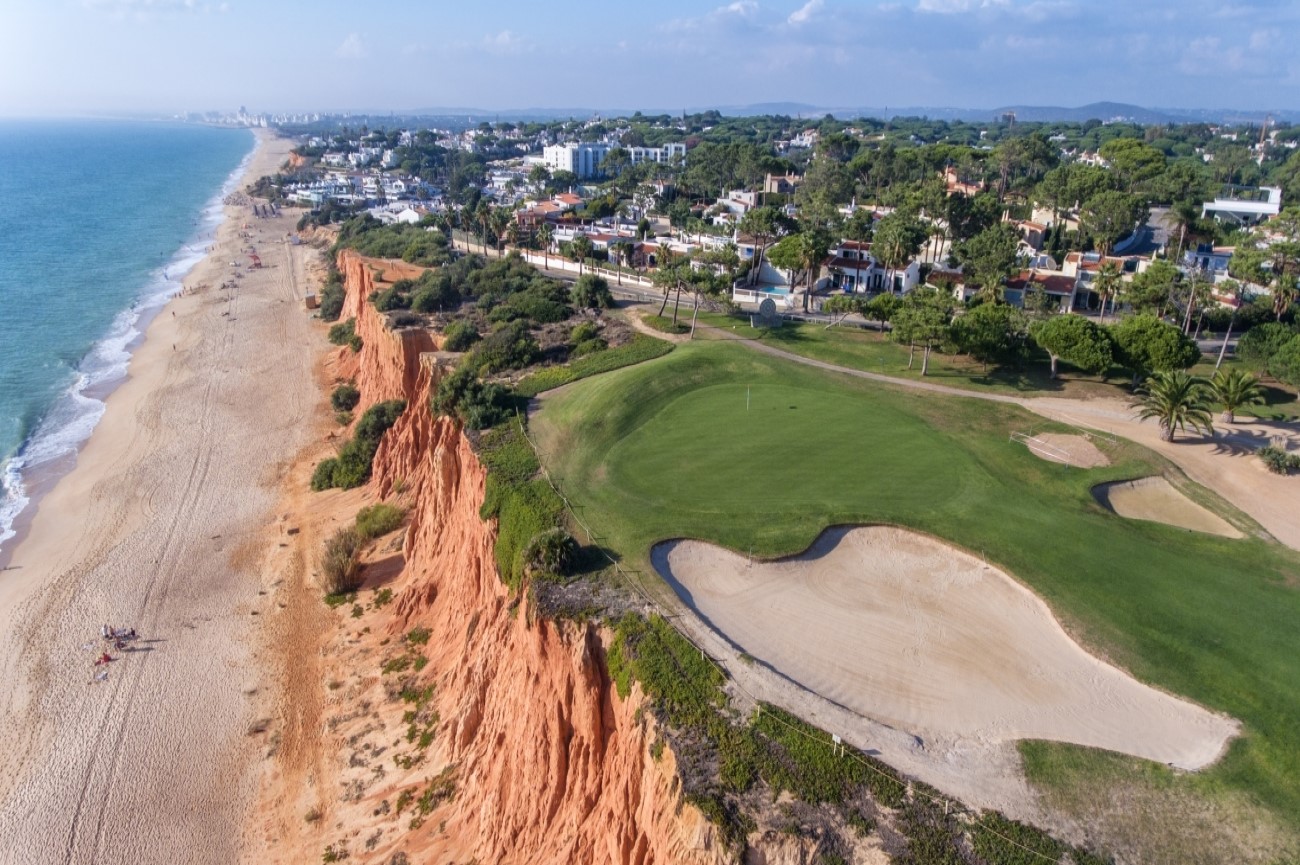
Few beaches in Portugal are as instantly recognisable as Praia da Falésia. A wall of red, orange and ochre cliffs, topped by umbrella pines, runs for around six kilometres along a strip of wide golden sand between Olhos de Água and the marina at Vilamoura. It is big enough that even in August you can walk ten minutes from an entrance and find space.
The size is also what makes Praia da Falésia confusing for a first visit. It has several entrances, car parks and names along its length, and each section feels different. This guide explains where it is, which part to choose, how to get there and how to stay safe below the cliffs. Practical details were checked on 22 November 2026.
Where is Praia da Falésia?
The beach lies on the south coast of the central Algarve, east of Albufeira town and west of Vilamoura. Most of it belongs to the municipality of Albufeira, and its eastern end reaches the boundary with Loulé at the Vilamoura marina. Albufeira’s old town is about 15 minutes away by car, and Faro airport about half an hour.
| Section | What it is like | Access and parking | Best for |
|---|---|---|---|
| Barranco das Belharucas and the Olhos de Água end | The most dramatic cliffs and natural sheltered corners | Narrow access roads and small car parks that fill early | Photography, quieter mornings |
| Açoteias | The classic central stretch, wide sand below high cliffs | Large free car park on the cliff top and wooden stairs down | A full family beach day |
| Alfamar | Long, open sand with hotels and beach bars behind the dunes | Car parks near the resorts, boardwalks to the beach | Long walks, beach bars |
| Rocha Baixinha (Poente and Nascente) | Lower cliffs and dunes, livelier beach clubs towards the marina | Paid parking behind the beach, or a walk of about 1.3 km from Vilamoura marina | Watersports, sunset drinks, staying in Vilamoura |
Which part of Falésia beach should you choose?
If you only visit once, Açoteias is the easiest all-round choice: it has the biggest car park, lifeguards in the bathing season, a beach restaurant and the cliffs at their most photogenic in both directions. Families with small children often prefer the eastern sections, where the sand is wider and the cliffs give way to dunes. Photographers and early risers will find the western end towards Olhos de Água the most striking, but parking there is tight, so arrive early or walk in from Açoteias along the sand.
The Albufeira sections of Falésia have flown the Blue Flag in recent seasons. The award is renewed every year, so check the current list from the Blue Flag association (ABAAE) if it matters to you.
How to get to Praia da Falésia
- By car. Follow signs for Olhos de Água, Açoteias or Vilamoura, depending on the section you want. Decide before you set off, because the entrances are not connected by a coast road.
- On foot from Vilamoura. From the marina it is about 1.3 km to the eastern end of the beach, a pleasant walk that avoids paid parking.
- By bus or taxi. Local buses link Albufeira, Olhos de Água and Vilamoura, but services are limited outside summer. A taxi or ride-hailing car from Albufeira takes around 15 minutes.
Can you walk from Falésia to Vilamoura?
Yes. The sand runs all the way to the Vilamoura marina, and walking the full length from the Olhos de Água end takes roughly an hour and a half at an easy pace. It is one of the best beach walks in the Algarve, especially in the soft light of late afternoon, when the low sun turns the cliffs a deeper red. Check the tide before you go: at high tide, the waves can reach the foot of the cliffs at the western end and cut off the way back.
Respect the cliffs and the Atlantic
The cliffs are made of soft layers of sand and clay, laid down millions of years ago and still eroding. Rock falls happen without warning, especially after heavy rain. Never sit or lay a towel directly below the cliff face, respect any fences or warning signs, and keep well back from the edge on the paths above.
The sea here is the Atlantic, so it stays cool even in summer, rarely much above 22°C, and waves can be strong on windy days. Swim only where lifeguards are on duty, and follow the flags. Outside the bathing season, most of the beach has no lifeguard cover.
When to visit
July and August are hot and busy, and the car parks at Açoteias and the western end can be full by mid-morning. June and September offer warm water, long days and much more space. In winter, the beach is almost empty and wonderful for walking, although many beach restaurants close. For sunset, the eastern sections near Vilamoura have the beach bars; for the colours on the cliffs, stay on the sand at Açoteias as the sun goes down. Falésia is one of the highlights on our list of essential things to see in Albufeira.
A local team for your Algarve property
Find out how our property management Algarve service looks after holiday homes, or explore our algarve holiday rentals for your next stay.
Frequently asked questions
Where is Praia da Falésia?
Praia da Falésia is on the south coast of the central Algarve, between Olhos de Água, east of Albufeira town, and the marina at Vilamoura. It runs for around six kilometres. Most of it belongs to the municipality of Albufeira, and Faro airport is about half an hour away by car.
Where should I park for Praia da Falésia?
The easiest option is the large free car park on the cliff top at Açoteias, with wooden stairs down to the sand. The western end towards Olhos de Água has small car parks that fill early, and near Vilamoura there is paid parking behind the beach, or you can walk about 1.3 km from the marina.
Is Praia da Falésia good for children?
Yes, especially the central and eastern sections, where the sand is wide and lifeguards are on duty in the bathing season. Keep children away from the foot of the cliffs, which can collapse, and swim only in the supervised areas, as the Atlantic can have strong waves.
Is Praia da Falésia worth visiting?
Yes. Its six kilometres of sand below red and orange cliffs make it one of the most striking beaches in Portugal, with space even in summer. Visit in June or September for warm water and fewer people, or in winter for a long, quiet walk to Vilamoura.